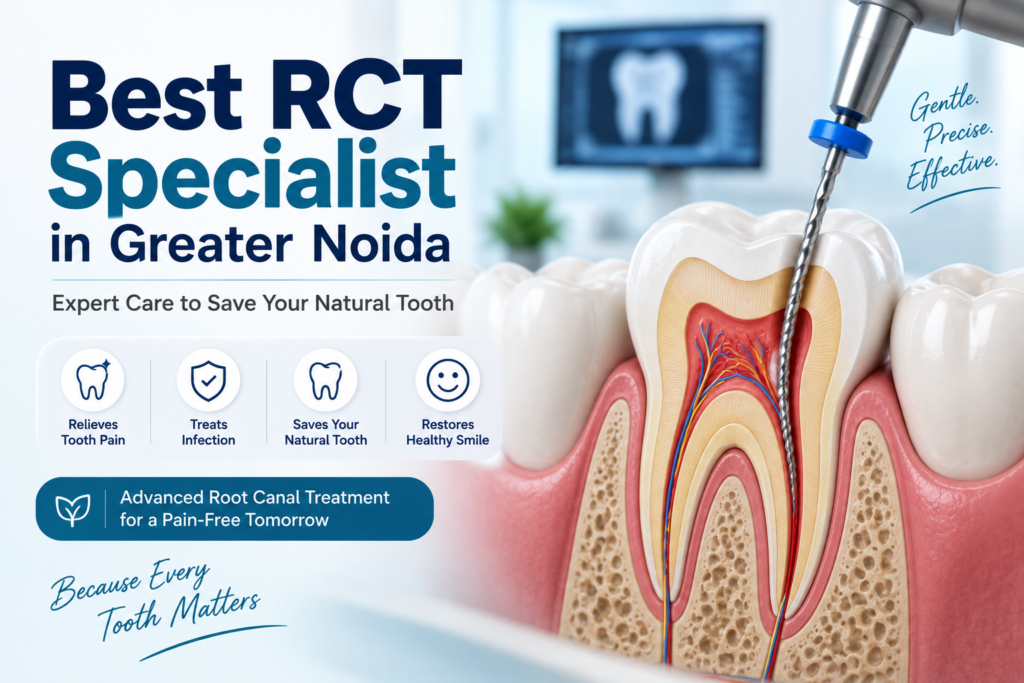
Best RCT Specialist in Greater Noida: How to Choose the Right Root Canal Specialist
Tooth pain can be difficult to ignore, especially when it becomes worse while eating, drinking something hot or cold, or lying down at night. In some cases, the problem may be caused by deep tooth decay, an injury, a crack, or an infection that has reached the inner part of the tooth. When the dental pulp becomes inflamed or infected, Root Canal Treatment (RCT) may be recommended to remove the infection and preserve the natural tooth. If you are searching for the Best RCT Specialist in Greater Noida, it is important to understand what makes a root canal specialist suitable for your particular dental condition. Choosing a dentist should not be based only on the word “specialist” or on online ratings. Experience with endodontic procedures, proper diagnosis, modern dental techniques, patient comfort, and a clear treatment plan are all important factors to consider. What Is Root Canal Treatment? Root Canal Treatment, commonly called RCT, is a dental procedure performed when the soft tissue or pulp inside a tooth becomes inflamed or infected. The treatment involves carefully removing the damaged pulp, cleaning and disinfecting the root canals, filling and sealing them, and then restoring the tooth so that it can continue functioning. The main purpose of RCT is to save the natural tooth rather than removing it. A successfully treated and properly restored natural tooth can continue to provide normal chewing function and appearance. This is one reason endodontic treatment is an important option when a tooth can still be preserved. When Do You Need an RCT? Not every toothache requires a root canal. A dentist needs to examine the tooth and determine what is causing the symptoms before recommending treatment. RCT may become necessary when the pulp inside the tooth is significantly inflamed or infected. Deep tooth decay is one of the common reasons for root canal treatment. A cavity that is left untreated can gradually move deeper into the tooth and eventually affect the pulp. A cracked or fractured tooth, repeated dental procedures, certain previous restorations, and dental trauma can also damage the pulp and lead to the need for endodontic treatment. Symptoms can vary from person to person. Persistent tooth pain, sensitivity to hot or cold that lingers after the source has been removed, pain while biting or chewing, swelling around the tooth, tenderness, or a recurring pimple on the gum can be warning signs that require dental evaluation. It is important not to ignore these symptoms simply because the pain becomes less intense. Dental infections can sometimes continue even when symptoms temporarily improve. A professional examination can help identify the actual condition of the tooth and determine whether RCT or another treatment is appropriate. Why Choose an RCT Specialist in Greater Noida? An endodontist is a dental specialist who focuses on the dental pulp and tissues surrounding the roots of teeth. According to the American Dental Association’s MouthHealthy, endodontists receive additional advanced training after dental school and are trained to manage routine as well as difficult and complex endodontic cases. This specialized knowledge can be particularly useful when a tooth has complicated root anatomy, an extensive infection, previous root canal treatment, a crack, or another problem that makes treatment more challenging. In some cases, a general dentist may also perform RCT, while more complex cases may require referral to an endodontist. Therefore, when looking for an RCT specialist in Greater Noida, consider whether the dental professional has relevant training and experience in root canal procedures and whether the clinic is equipped to properly diagnose and manage your particular case. What Happens During Root Canal Treatment? Before starting treatment, the dentist examines the affected tooth and may use dental X-rays or other diagnostic methods to understand the condition of the tooth and surrounding structures. Once the treatment plan is confirmed, local anesthesia is used to numb the area and keep the patient comfortable. The dentist then creates an opening in the tooth to access the infected or inflamed pulp. The damaged tissue is removed, and the root canals are carefully cleaned and shaped. The canals are subsequently filled and sealed to help prevent bacteria from entering the treated space again. After the root canal, the tooth may need a permanent filling or dental crown depending on how much tooth structure remains and which tooth has been treated. A crown can provide additional protection to a weakened tooth when recommended by the dentist. Following the complete restoration plan is an important part of protecting the treated tooth. Is Root Canal Treatment Painful? One of the biggest reasons people delay RCT is fear of pain. Modern root canal treatment is performed using local anesthesia, and the procedure itself is generally designed to be comfortable. The American Association of Endodontists explains that modern techniques and anesthetics allow most patients to remain comfortable during treatment. Some sensitivity or mild discomfort can occur for a few days after treatment, particularly when there was an infection or significant inflammation before the procedure. Your dentist can advise you on appropriate aftercare and pain management based on your individual situation. The important point is that delaying treatment because of fear may allow an untreated dental problem to become more complicated. If you have persistent tooth pain or swelling, arranging a dental examination is a better approach than continuing to tolerate the symptoms. How Long Does a Root Canal Take? The duration of RCT depends on the tooth, the number and shape of its canals, the extent of infection, and the complexity of the case. Some root canal treatments can be completed in one appointment, while others may require two or more visits. Molars can sometimes require more attention because they may have multiple canals and more complex anatomy. Your dentist or endodontist can explain how many appointments may be required after examining your tooth. What Should You Look for in the Best RCT Specialist in Greater Noida? When searching for the Best RCT Specialist in Greater Noida, look beyond advertisements and focus on the quality