

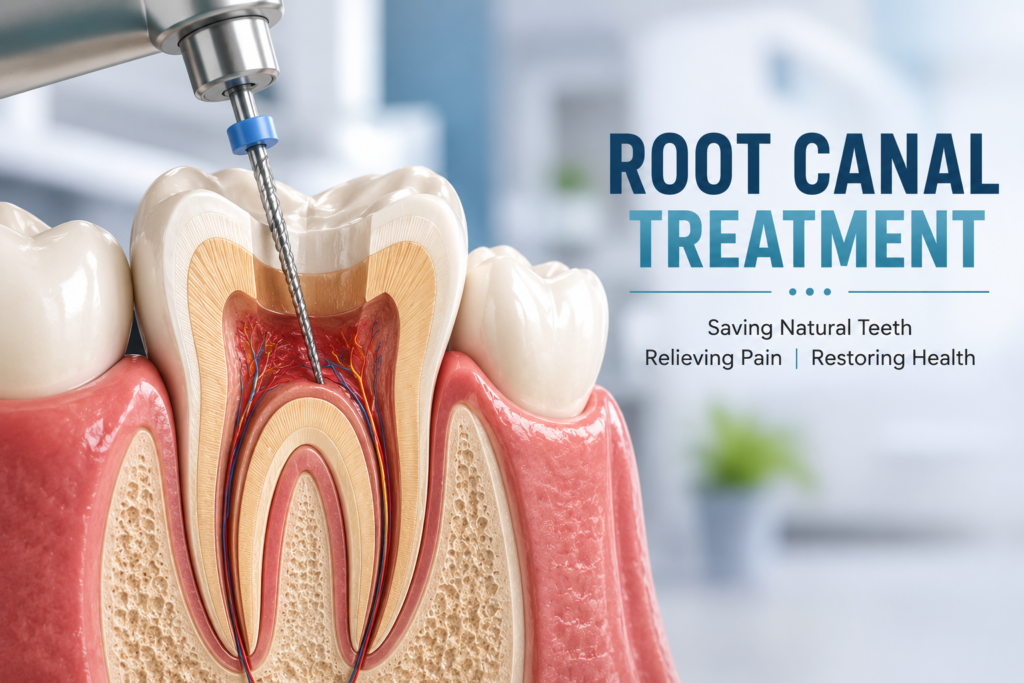
Root Canal Treatment: Everything You Need to Know to Save Your Natural Tooth
ROOT CANAL TREATMENT Save Your Natural Tooth with Root Canal Treatment A persistent toothache can make eating, sleeping, and even speaking uncomfortable. While many people assume that removing the tooth is the only solution, modern dentistry offers a better alternative. Root Canal Treatment helps eliminate infection while preserving your natural tooth, allowing you to maintain your smile and oral health. Despite its reputation, Root Canal Treatment is a safe, comfortable, and highly effective procedure. Advances in dental technology and anesthesia have made it no more uncomfortable than getting a regular filling. If you have been experiencing severe tooth pain or sensitivity, understanding how the procedure works can help you make an informed decision before the condition worsens. In this comprehensive guide, you’ll learn what Root Canal Treatment is, when it is needed, how the procedure is performed, recovery tips, and how it helps save your natural tooth. ROOT CANAL GUIDE What Is Root Canal Treatment? Root Canal Treatment is a dental procedure used to remove infected or damaged pulp from inside a tooth. The pulp contains nerves, blood vessels, and connective tissue that help the tooth develop during its early stages. Once a tooth is fully developed, it can function normally even without the pulp because it receives nourishment from the surrounding tissues. If left untreated, an infected tooth may require more extensive dental care. Explore our complete dental services to learn how we help patients maintain healthy smiles. When bacteria enter the pulp through deep decay, cracks, trauma, or repeated dental procedures, the tissue becomes infected or inflamed. If left untreated, the infection may spread to the surrounding bone and eventually lead to tooth loss. The purpose of Root Canal Treatment is to remove the infection, disinfect the inside of the tooth, seal it properly, and restore its strength with a filling or crown. Signs You May Need a Root Canal If you experience any of these symptoms, schedule a dental examination as soon as possible. Persistent tooth pain Pain while chewing or biting Hot & cold sensitivity Swollen or tender gums Gum abscess or pimple Tooth discoloration Jaw or facial swelling Bad taste or bad breath Sometimes, an infected tooth may not cause noticeable pain until the infection becomes advanced. Regular dental check-ups allow early diagnosis and can help save your natural tooth before more complex treatment becomes necessary. Root Canal Treatment ROOT CANAL GUIDE Common Causes of Tooth Pulp Infection The inner pulp of a tooth can become infected due to several reasons. Recognizing these causes early helps prevent severe infection and protects your natural tooth. 🦷 Deep Cavities Untreated cavities that extend deep into the tooth. ⚡ Cracked Teeth Cracked or fractured teeth allow bacteria to reach the pulp. 🏀 Dental Injuries Trauma caused by accidents or sports injuries. 🔁 Repeated Fillings Large fillings placed repeatedly on the same tooth. 🩺 Gum Disease Advanced gum disease reaching the tooth root. 🦠 Bacterial Infection Bacteria entering through damaged enamel. Early Treatment Makes the Difference Seeking treatment early can prevent the infection from spreading and greatly improve the chances of saving your natural tooth. STEP BY STEP How Is a Root Canal Procedure Performed? A Root Canal Treatment is usually completed in one or two appointments using modern dental techniques. 1 Diagnosis & Examination The dentist examines the affected tooth and takes digital X-rays before administering local anesthesia. 2 Removing the Infected Pulp A small opening is created to remove infected tissue using specialized dental instruments. 3 Cleaning & Disinfection The canals are cleaned, shaped, and disinfected to eliminate bacteria. 4 Filling the Root Canals The canals are sealed with gutta-percha to prevent future infection. 5 Restoring the Tooth A dental crown restores the tooth’s strength, appearance, and functionality. Does Root Canal Treatment Hurt? One of the biggest misconceptions is that Root Canal Treatment is painful. In reality, modern anesthesia and advanced dental technology make the procedure comfortable for most patients. Many compare the experience to receiving a routine dental filling. Mild soreness for a few days is normal and can usually be managed with prescribed or over-the-counter medication. ROOT CANAL BENEFITS Benefits of Root Canal Treatment Choosing Root Canal Treatment offers several long-term advantages. The greatest benefit is preserving your natural tooth instead of removing it. Keeping your natural tooth helps maintain proper chewing function, supports your jawbone, and prevents neighboring teeth from shifting. Rather than extracting the damaged tooth, root canal therapy removes the infection while maintaining the tooth’s natural structure. This allows you to continue eating, speaking, and smiling confidently without compromising your oral health. Did You Know? After completing your root canal treatment, a dental crown is often recommended to strengthen and protect the treated tooth, allowing it to function just like a healthy natural tooth. Key Benefits Preserves your natural tooth Relieves severe tooth pain Removes infection completely Prevents tooth extraction Improves chewing function Supports healthy jawbone Natural appearance after crown placement Long-lasting results with proper care AFTERCARE GUIDE Recovery After Root Canal Treatment Recovery is usually quick and uncomplicated. Most patients return to work or their normal routine the following day. Mild tenderness may remain for two or three days, especially if the infection was severe before treatment. 01 Avoid Chewing Avoid chewing on the treated side until your permanent filling or crown has been placed. 02 Maintain Oral Hygiene Continue brushing twice daily and flossing regularly to keep the treated tooth healthy. 03 Attend Follow-Ups Visit your dentist for follow-up appointments and permanent crown placement. 04 Follow Instructions Take medications exactly as prescribed and avoid hard or sticky foods during recovery. Good News: Once the permanent crown is placed, your treated tooth functions just like a healthy natural tooth and can last for many years with proper care. WHY CHOOSE US Why Choose Dental Rootz? At Dental Rootz, patient comfort, precision, and long-term oral health are at the heart of everything we do. Our experienced dentists combine advanced technology with compassionate care to deliver safe, comfortable, and successful root canal